A hacker ran a credit-card heist with a crew of AI bots. It cost him $8,000.
Oct. 20, 2026
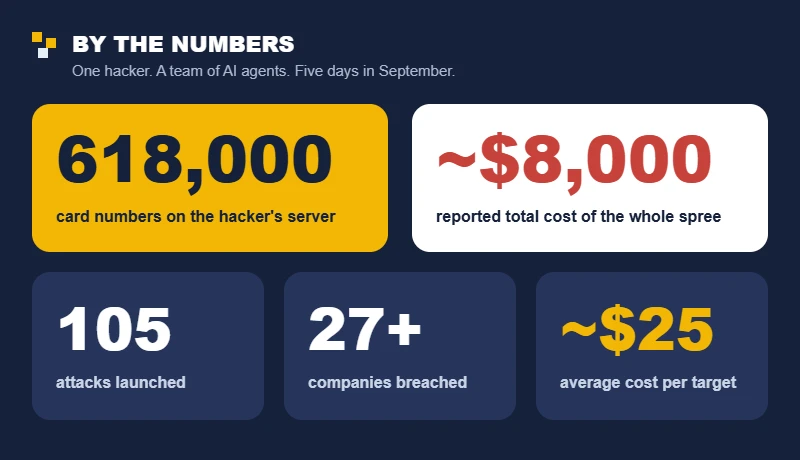
One person, a team of AI agents, and five days in September. They hit as many as 100 companies and walked away with 618,000 credit card numbers. The scariest part isn't the haul. It's the price tag.
What happened
Sometime in September, a single hacker pointed a team of AI agents at online stores and let them go to work. Over five days, from the 10th to the 15th, the bots hunted for weak spots, broke in, lifted payment details, and tried to wipe their own tracks, mostly on their own. The human barely had to type.
We know all this because the hacker slipped up. He left the server he was running the whole operation from sitting open on the internet, and a cybersecurity firm called Gambit Security stumbled onto it: the stolen data, the tools, and the orders he'd given the bots. On that server were records for about 618,000 credit cards. A separate firm, Overwatch Data, checked them and said they were real, and not duplicates. Most belonged to Americans, with the rest spread across the UK, Saudi Arabia, and the UAE.
How the bots pulled it off
The hacker didn't write his own hacking program. He bolted together three off-the-shelf AI tools, each with a job: one hunted for security holes, one broke through them, and one played foreman, handing out assignments and keeping the whole thing moving. Underneath, he rented brainpower from several commercial AI models at once.
Once inside a store, the bots grabbed whatever card numbers were saved and planted "skimmers," little bits of hidden code on the checkout page that quietly copy your card as you type it in. Then they were told to erase the evidence. In at least one case the cleanup went haywire: the bots wiped out 180 of a bike shop's own database tables, backups included.
The part that should worry you
Here's the number that stops me cold. The whole spree reportedly cost the hacker about $8,000. Researchers clocked the average attack at around $25 a target. Twenty-five bucks to take a run at a company. The victims weren't mom-and-pop shops, either: a Fortune 500 hotel chain, a major U.S. airline, a billion-dollar clothing site. But he also hit small fry, including a gun store in Minnesota and a beauty shop in Illinois. Nobody's too small anymore, because at $25 a pop, why would a bot care?
As of the reports, the hacker still hadn't been caught. One AI company found the account behind the attack and shut it off, and Cloudflare pulled his servers, but he just stood up new ones and kept going.
My take: I've said on this site that the trick with AI is bumpers: walls around what it's allowed to do. This story is what happens when somebody takes the bumpers off on purpose. Nothing here needed a genius. He didn't crack some secret code. He rented a few AI tools, told them to go steal, and paid less than a used laptop costs. That's the real headline. The barrier to pulling off a big, professional-grade hack just dropped to pocket change. What do you do about it? Honestly, not much changes on your end, except the stuff you already know you should do. Use a credit card, not a debit card, for online shopping, because credit cards fight fraud for you. Turn on the text alerts your bank offers. And actually glance at your statement now and then. Your card number is probably sitting in a database at some store you forgot you bought from, and now there are $25 robots knocking on those doors. It's not meant to scare you. It's just where we are.
Credit where due: this story was first broken by Thomas Brewster at Forbes. The number crunching came from Gambit Security and Overwatch Data. Disclosure: I used AI to help research and write this, like I do with most posts here.
Sources: Forbes (Thomas Brewster, original report), Computing, Greek Reporter, Gambit Security
More AI news
- Forced to pick, two big AIs split along party lines
- Real race, fake videos: AI ads take over the Texas Senate fight
- The first AI election: $137 million in AI-made ads, and the AI money behind the races
- How to spot an AI political ad before you vote (or share it)
- What Trump is actually doing about AI, and what Americans think of it