Is AI raising your electric bill? Here's the honest answer.
Oct. 24, 2026
Giant AI data centers are going up all over the country, and they eat power like small cities. The president says they should make their own electricity, Congress couldn't agree on a fix, and your bill may already be carrying part of the cost. Here's what's actually going on, in plain English.
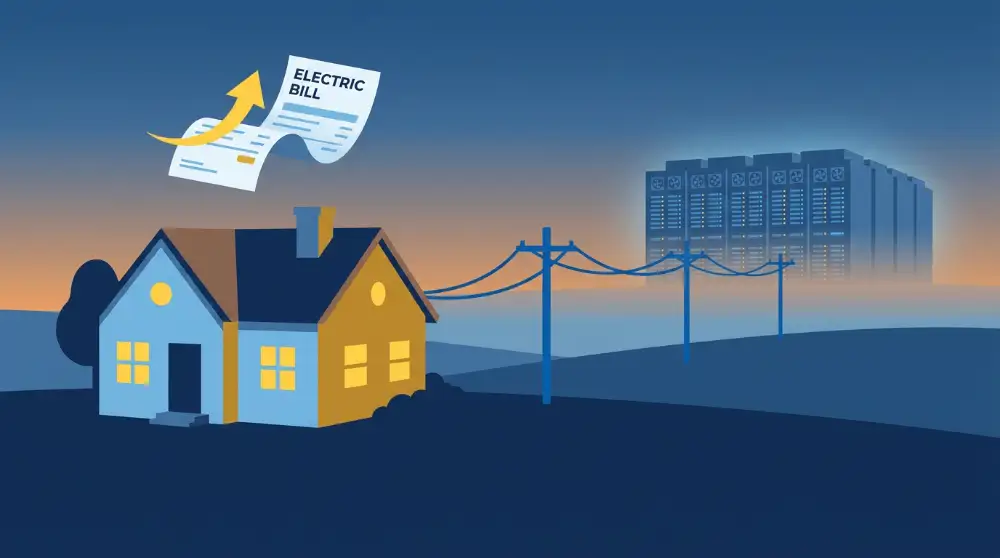
On Oct. 21, President Trump posted on Truth Social that big new data centers have to make their own electricity, sell or give their extra power to the local grid, and pay people who live nearby a "dividend." It's a sign of how hot this issue has gotten heading into the Nov. 3 midterms. As of the next day, though, no executive order or official rule had been published to back the post up. So let's skip the politics and get to the question you actually care about: are these things making your power bill go up?
The short answer
In some parts of the country, yes, a little, and probably more over the next few years. But data centers aren't the only reason bills are climbing, and how much you pay depends a lot on where you live and what your state decides.
Here's the backdrop. Home electricity prices rose about 7% across the U.S. in 2025, more than twice the rate of inflation, and more than 20% in some states, according to Consumer Reports, citing federal data. Inflation and an aging grid are part of that. Data centers are a growing part too.
How a data center ends up on your bill
A big AI data center can need as much power as a city. To hook one up, utilities have to build new power lines, substations and sometimes whole power plants. Those costs usually get spread out across every customer in the region, not just the data center. Harvard electricity law expert Ari Peskoe told NPR that it lands on every home and business with a meter, including people who never touch AI.
The clearest example is PJM, the grid operator that runs the power system for more than 65 million people in 13 states and Washington, D.C., from New Jersey and Maryland out to Ohio and northern Illinois. PJM holds yearly auctions to pay power plants to be ready for the hottest and coldest days. Look at what that price has done:
- 2024–25: about $29 per megawatt-day
- 2025–26: about $270 (a record at the time)
- 2026–27: about $329
- 2027–28: about $333
- 2028–29: $325, and only that low because of a price cap Pennsylvania's governor negotiated
That's more than ten times higher in four years. PJM's independent market watchdog says demand from new and planned data centers is the main reason. PJM itself expects its peak demand to grow by about 32 gigawatts from 2024 to 2030, and almost all of that comes from data centers. In northern Illinois, that capacity charge is roughly a fifth of what ComEd customers pay for electricity, according to the Citizens Utility Board, a consumer group.
How much could it add up to? Estimates are all over the map. In 2024, Maryland's consumer advocate office forecast that data-center-related costs could add up to $216 a year for residents. The environmental group NRDC has estimated an average family's bill could rise about $70 a month by 2028 if data center growth goes unchecked. Treat both as warnings, not promises.
The other side of the story
This isn't a simple villain story, and the evidence so far is more mixed than the headlines.
- One big study found almost nothing, so far. Researchers at Rutgers looked at more than 2,000 data centers in 24 states from 2014 to 2024. They found no clear, reliable jump in nearby home bills. Their best estimates ranged from about $2 a month higher to $2 a month lower, and none held up statistically. The catch: that's mostly the older, smaller data centers from before the AI boom. Today's AI campuses can be many times bigger, and new power lines take years to show up on bills. The researchers' own title says it: "mostly not. Yet."
- Better grid, fewer outages. A University of Maryland professor told NPR that a lot of these upgrades are long overdue anyway, and that homes near data centers where the grid was beefed up have seen fewer outages in bad weather.
- Rules can flip the math. Oregon passed a law creating a separate rate class for the biggest power users. In July, regulators approved a 29.7% rate increase for data centers and other huge users on Portland General Electric's system, and home customers got a 1.3% cut, about $1.91 a month. Same utility, same data centers, very different result for regular people.
What Washington has done (and hasn't)
- March 4: Seven big tech companies signed a White House "ratepayer protection pledge" to bring their own power and pay for grid upgrades. It's voluntary, and critics like Peskoe call it unenforceable.
- Sept. 30: The Ratepayer Protection Act passed the House but died in the Senate, 57 to 43, three votes short of the 60 it needed. Most Democrats voted no, saying it only asked states to consider making data centers pay, without requiring it.
- Oct. 9: Federal regulators threw out most of PJM's plan for hooking up giant power users, including rules that would have made them bring their own new power. Analysts at Jefferies said that could keep PJM prices high for longer.
- Oct. 21: Trump's post saying data centers must make their own power and pay neighbors a dividend. No details yet on who qualifies, how much, or how it would be enforced.
Meanwhile, the real action is in the states. In 2026 alone, lawmakers in more than 30 states have introduced over 300 data center bills, according to Consumer Reports.
What you can do
- Read your bill. Look for the supply or "capacity" part of the charges and compare it with the same month last year.
- Find out who runs your grid. If you're in a PJM state, those auction prices flow into your bill over time.
- Watch your state's utility commission. They decide who pays for grid upgrades, the data center or you. Rate cases are public, and most commissions take public comments.
- Show up locally. Zoning and county meetings are where data centers get approved or blocked, and local pushback has changed real projects.
My take: I run my own home server, so I know power isn't free and these machines are thirsty. I'm not against data centers. I use the AI they run every day. But the honest question isn't "are data centers bad?" It's "who pays for the wires?" Oregon just showed you can make the giant users cover their own costs and still cut bills for regular homes. A social media post and a voluntary pledge aren't rules, and the federal fix died in the Senate. So for now, the people who decide what lands on your bill are your state regulators. That's where I'd keep an eye.
Coming up tomorrow
Humanoid robots that fold your laundry and load the dishwasher: what's real, what's hype, and when you could actually buy one. That's tomorrow's Science Bits.
Everything here is written in my own words from the sources below. I used AI (Claude, by Anthropic) to help research and draft this, then checked the facts against these sources. Dollar estimates are forecasts from the groups named, not measured bill increases.
Sources:
- Northeast Times: Trump says big data centers must make their own electricity (Oct. 23, 2026)
- Tom's Hardware: Trump calls for data centers to pay community dividends (Oct. 21, 2026)
- NPR: How much are AI data centers adding to your electricity bill? (Oct. 4, 2026)
- Tom's Hardware: Senate kills the Ratepayer Protection Act
- Citizens Utility Board: PJM capacity prices stay high (July 15, 2026)
- Canary Media: PJM's capacity costs hit a record (Dec. 2025)
- Rutgers New Jersey State Policy Lab: Are data centers raising your electric bill? Mostly not. Yet. (June 2026)
- OPB: Oregon approves PGE's 29.7% rate hike for data centers (July 7, 2026)
- Consumer Reports: AI data centers' impact on electric bills, water and more (Mar. 20, 2026)
More AI news
- Forced to pick, two big AIs split along party lines
- Real race, fake videos: AI ads take over the Texas Senate fight
- The first AI election: $137 million in AI-made ads, and the AI money behind the races
- How to spot an AI political ad before you vote (or share it)
- What Trump is actually doing about AI, and what Americans think of it