OpenAI wants you to claim your business in ChatGPT. Should you?
Nov. 13, 2026
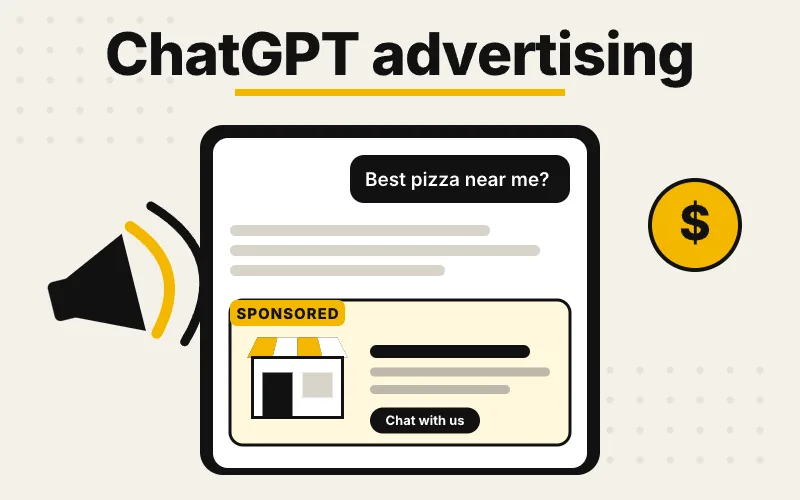
On Nov. 10, OpenAI opened a beta called Businesses in ChatGPT. The main piece is Business Hub, a free page where an owner can claim their business, correct the details ChatGPT uses about it, and see how often ChatGPT sends people to their website. Eligible U.S. online stores and online service companies can also publish a Business Agent, a branded chat assistant that answers shoppers' questions.
What it is, in plain English
Think of it as Google Business Profile, but for AI answers. When someone asks ChatGPT about a company, it can now lean on details the owner has confirmed instead of whatever it pieced together from around the web.
- Claim it. You prove the business is yours, then edit your category, description, logo and policies.
- Feed it. Online stores can upload a product list with prices and stock. Shopify stores can connect directly.
- Watch it. A dashboard shows mentions, website clicks and common topics over the past 7 or 28 days. It never shows what people typed or what they chatted about.
Why OpenAI is doing this
Money. OpenAI says 1.2 billion people use ChatGPT every week, but only a small share pay for it. Ads started testing on Feb. 9 for U.S. users on the free and low-cost Go plans, and OpenAI says its ad business has reached a $1 billion yearly pace.
Business Hub looks like the front door to that ad business. Claiming is free. The free Business Agent has a paid twin, the sponsored agent, which OpenAI has been testing since September. An OpenAI ads executive described the free one as the organic version and the paid one as the same agent with a budget behind it. Google did the same thing years ago with Business Profile and Search Console. One tester said that within a minute of claiming a profile, OpenAI offered $500 in ad credit.
OpenAI also says claiming a profile doesn't change how often a business shows up in answers.
The good
- It's free for now. You don't need a ChatGPT plan, an ads account or an enterprise deal.
- You can fix mistakes at the source. Wrong hours, an old return policy, a bad description.
- Real numbers from OpenAI. Until now, businesses relied on third-party tools that guess by running test questions.
- Chats stay private. OpenAI says it doesn't hand users' conversations or agent chats to businesses.
- Agent chats are labeled and kept separate from your main ChatGPT conversation. When you're ready to buy, the agent sends you to the store's own website.
The not-so-good
- It's a beta, and U.S.-first. Agents are limited to U.S. ecommerce and online services. Local shops and restaurants can only claim a listing that already exists.
- Hoops. After the first check, there's a separate identity check through a company called Persona. One tester reported a government ID, a face scan and company registration details. People on OpenAI's own forum report failed checks with no reason given and trouble with the domain step.
- The numbers are narrow. For an online business, a "mention" only counts when ChatGPT references your website. Just naming your brand counts for nothing. Clicks are clicks on links inside ChatGPT, not confirmed visits, so they won't match your own analytics. Small businesses may see a blank dashboard because low counts are hidden.
- ChatGPT only. Nothing about Gemini, Perplexity or Google's AI answers, and no competitor comparison.
- No boost. Claiming doesn't buy you a better spot.
- "Free" has an asterisk. OpenAI hasn't ruled out charging later.
- Less control than it sounds. OpenAI builds and runs the agent from your instructions and product list. You can't bring your own. Under the terms, you're also responsible for any customer details you collect.
- Conflict of interest. The company selling you the stats also sells the ads.
If you just use ChatGPT
You may start seeing business profiles with a blue check, current details, and buttons to chat or visit the website. In an agent chat you can compare sizes, colors and prices before heading to the store's site.
That's handy. You get fresher hours and policies and fewer wrong guesses. But remember who that agent works for. It's a salesperson for the brand, not a neutral reviewer, and the sponsored version is an ad. Look for the label, and double-check anything that matters. A big BrightLocal survey found the share of people using AI to find local businesses jumped from 6% to 45% in a year, and most of them still fact-check what the AI tells them.
If you run a small business or website
- Sign in to ChatGPT with your work account and open chatgpt.com/business-hub.
- Search for your business name, or add it if it isn't listed.
- Prove it's yours by phone, email, website domain or Shopify. The domain route means adding a record at your web host, so have that login handy. One tester said the code changed every time the claim restarted.
- Pass the ID check. You can't publish edits or see numbers until you do.
- Fill in your profile. Use your legal business name (one claim under a trading name failed). Keep the description short, since one guide puts the limit near 300 characters, and make sure it matches your website.
- Make sure your site isn't blocking OAI-SearchBot, OpenAI's search crawler. Blocking it keeps you out of ChatGPT's search answers.
- Watch for utm_source=chatgpt.com in Google Analytics. ChatGPT adds it to links so you can spot the traffic.
How it could help us
This site isn't a store, so there's no agent for us. But claiming a profile is open to online businesses with a website, and Search Engine Journal tested it by claiming its own publication under the "magazine publisher" category. Here's what we could get out of it:
- A straight count of how often ChatGPT points people to Just Spilling the Bits.
- A correct description of what we do, in our words.
- One less worry. Our robots.txt doesn't block any crawlers, so OAI-SearchBot is welcome.
- Traffic we can see by watching for the ChatGPT tag in our analytics.
What we could find out
- How often ChatGPT cites us. A count for the past week or month.
- How many of those turn into clicks. Divide clicks by mentions and we get a rough click rate.
- What ChatGPT thinks we're good for. The dashboard lists up to five common topics where our site gets cited. Is it AI news, scam warnings, tool reviews? That tells us where to dig deeper.
- Whether it's growing. We could write the numbers down each week and see if new stories move them.
- Whether we show up at all. A blank dashboard would tell us we're still too small to register.
What it won't tell us: which stories got cited, what people asked, or anything about other AI tools. For those we'd lean on our own analytics and an occasional manual check, like asking ChatGPT what it knows about the site.
The honest limits: a small, new site may not get enough activity to show any numbers. OpenAI's pages don't say anything about publishers, and one guide tells publishers to read the terms carefully first. And the ID check is personal, since it's my own ID and face. I haven't claimed one yet. I'll decide after seeing how the early bugs shake out.
Where this is probably going
This part is my read, not reporting. OpenAI calls this an early step and says more markets and business types are coming, with no dates. Features for chains with many locations are on the list too.
- The free tier becomes a funnel. Claim, look at your numbers, then pay to be the sponsored answer. A paid tier for the data wouldn't surprise me.
- Everyone else follows. Google already puts ads in its AI answers, and Perplexity is chasing AI shopping too.
- More buying starts in a chat and ends on a store's website. Businesses with accurate, current information will do better there.
My take: If you run an online business, claim it. It's free, and wrong information about you in ChatGPT is worth fixing. Just treat it like a free sample from an ad company. Use the numbers, keep your own analytics, and don't buy ads until you can see they pay off. If you only use ChatGPT, enjoy the better details, and treat any business's agent like a salesperson. It's there to help you buy, not to tell you whether you should.
Disclosure: OpenAI competes with Anthropic, the company behind Claude, which helped me research and write this.
Sources: VentureBeat, Digiday, Adweek, Trending Topics, Comms With AI (hands-on test), Search Engine Journal, PPC Land, GrowthX, OtterlyAI (an AI-visibility vendor), OpenAI Developer Community, OpenAI, OpenAI Help Center (publishers FAQ), BrightLocal, PMG (ads announcement)
More AI news
- Forced to pick, two big AIs split along party lines
- Real race, fake videos: AI ads take over the Texas Senate fight
- The first AI election: $137 million in AI-made ads, and the AI money behind the races
- How to spot an AI political ad before you vote (or share it)
- What Trump is actually doing about AI, and what Americans think of it