Your AI shopping bot just got a rulebook (sort of)
Oct. 18, 2026
AI agents that shop for you are already here. The rules for how they get along with stores are not. A group led by Meta, Walmart, Shopify and Stripe just proposed some. Here's what that means for you, and what's still missing.
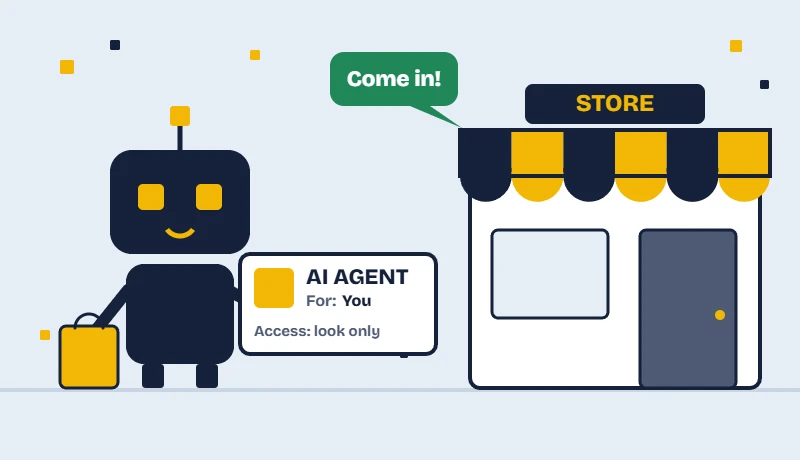
Imagine telling your phone "order more dog food and book me a haircut Saturday" and it just does it. No apps, no clicking, no typing your card number for the hundredth time. That's the promise of AI shopping agents, and it isn't sci-fi anymore.
There's one problem. Nobody agreed on the rules. Stores don't always know a bot is shopping on their site, or who sent it. On Oct. 6, a group of big names said they want to fix that with a new open standard called the Personal Agent Protocol.
How we got here: Amazon slammed the door
Meta launched its personal AI agent, Muse, on Sept. 8. It can shop, book appointments and handle other multi-step chores for you. When a site has no official way in, Muse simply works the website itself, like a person clicking around. People loved it, and it shot to the top of the free app charts within its first week.
Twelve days after launch, on Sept. 20, Amazon blocked it (we covered that here). Muse users trying to shop Amazon got a pop-up saying an unauthorized AI agent was breaking Amazon's Conditions of Use. Amazon said Meta never warned it, that Muse doesn't identify itself as a bot, and that it seems to hold on to customers' login details. Meta says Muse can't see your passwords or payment info and asks you before it buys anything.
This isn't Amazon's first fight like this. It sued Perplexity last year over that company's shopping agent and has moved to block agents from Google and OpenAI too. Worth noting: Amazon builds its own shopping assistants, so it has skin in the game.
So what is the Personal Agent Protocol?
Think of it as a handshake. When your AI agent walks into a store's website, the protocol gives it a standard way to say "Hi, I'm a bot, and I'm shopping for this customer." The store then decides what that bot is allowed to do.
It was announced by Sierra, an AI customer-service company co-founded by Bret Taylor and Clay Bavor, together with Meta. Partners named so far: Walmart, Shopify, Stripe, Genesys, Rocket and Instinct.
Here's how it works in plain English:
- Your agent lands on a company's website and finds out what that business offers agents and how to connect.
- It signs in using OAuth, the same tech behind "Sign in with Google" buttons. You choose whether it gets look-only access or permission to actually do things, like place an order.
- The business picks the route: its regular website, its APIs, or its own customer-service bot that talks to your bot.
The big idea: you decide how much access your agent gets, and the store decides what agents can do on its turf. The protocol is open, so anyone can use it.
The ups and downs
Ups
- No more sneaking around. Bots that announce themselves beat bots pretending to be you. The store knows what's happening, and so do you.
- You hold the keys. Pick look-only or full access instead of handing an agent your whole login.
- Faster than clicking. Today most agents fill out web forms like a person and fall back on support chats when they get stuck. A direct connection should be quicker and break less.
- Perks may be coming. Sierra lists ideas like alerts when your order ships or your flight is delayed, and payment add-ons that let an agent buy something without sharing your card number.
Downs
- Amazon isn't in it. The biggest online store in the US started this fight, and it's not on the partner list. Your agent may still get bounced there.
- It's mostly a promise right now. The protocol is at an early stage and isn't an industry standard yet. The payment piece is on the roadmap, not built.
- Who pays when the bot messes up? If your agent orders 40 bags of dog food instead of 4, it's not clear who eats the cost. These new agent protocols handle identity first and leave liability for honest mistakes unsettled.
- Too many "standards." Google has its own commerce protocol, Visa has another, and Stripe and Shopify have already signed on to Visa's too. Competing rulebooks could mean your agent works great at one store and stumbles at the next.
- Not every bot will play nice. Sierra itself admits some agents may simply ignore the protocol. Rules only help if people follow them.
My take: AI agents that shop for you are coming whether stores like it or not, and a handshake where bots say who they are beats today's free-for-all. But this is a first step, not a finish line. Amazon's not on board, the money side isn't built, and nobody has answered who pays when an agent buys the wrong thing. If you try one of these agents, keep it on a short leash: give it the least access it needs and check every order before it goes through. Would you let an AI do your shopping?
Everything here is written in my own words from the sources below.
Sources:
- Unite.AI: Sierra unveils Personal Agent Protocol
- CMSWire: Genesys joins Sierra, Meta on open standard
- FourWeekMBA: Meta and Sierra announce Personal Agent Protocol
- Channel Insider: Meta joins Walmart, Shopify, Stripe
- The Next Web: Sierra announces Personal Agent Protocol
- Forkast: Every new agent protocol ships identity first and money later
- eesel: Personal Agent Protocol explained
- Implicator: Amazon blocks Meta's Muse shopping agent
- Shelly Palmer: Amazon blocks Meta's Muse
More AI news
- Forced to pick, two big AIs split along party lines
- Real race, fake videos: AI ads take over the Texas Senate fight
- The first AI election: $137 million in AI-made ads, and the AI money behind the races
- How to spot an AI political ad before you vote (or share it)
- What Trump is actually doing about AI, and what Americans think of it